
Achieve Digital Sovereignty
in the Age of AI, Cloud and Geopolitical Uncertainty
Take control of your data, technology and operations
As digital ecosystems expand across providers, regions and technologies, a critical questions emerges:
who truly controls your data and digital infrastructure?
AI is reshaping how data is consumed and controlled. Geopolitical pressures are redrawing the rules on where it can live. And regulatory frameworks are pulling in different directions.
Our practical guide cuts through the complexity — exploring how organisations can maintain control over their data, infrastructure and digital operations in an era defined by uncertainty.
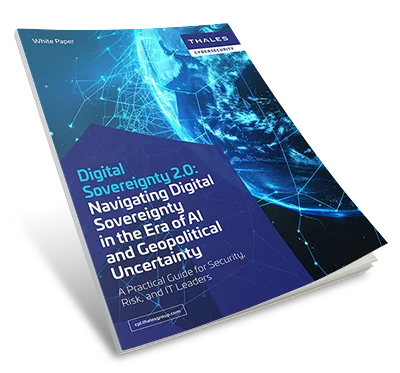
2026 THALES
DATA THREAT REPORT
54% of organisations are pursuing reworking and refactoring of application and data architectures as their main focus in achieving sovereignty objectives.
36% of organisations believe cryptographic protections such as encryption and key management are sufficient to achieve data sovereignty.
We Understand Today's Digital Sovereignty Challenges

Growing dependence on global digital platforms
A significant proportion of global digital infrastructure is operated by a small number of providers. 92% of all data in the western world is stored on US-owned infrastructure, increasing concerns about dependency and resilience.
Conflicting legal and regulatory frameworks
Organisations operating internationally must navigate overlapping laws governing data protection, privacy, and government access to data. For example, while regulations such as GDPR enforce strict data protection requirements, US laws like the CLOUD Act and FISA Section 702 can permit authorities to access data held by US-based providers — regardless of where that data resides.
This creates tension between global cloud services and local regulations, requiring organisations to manage compliance risk while maintaining control over their data.
AI is transforming the control model
Artificial intelligence introduces new complexity to digital sovereignty. Data is no longer only stored — it is consumed, learned from, and embedded into models. Once data is incorporated into an AI model, traditional controls around deletion, residency and access become far harder to enforce.
The Questions Every Organisation Must Answer

Where is data stored and processed?
How is data reused or inferred from by AI systems?
Which parties ultimately control the underlying infrastructure?
How to Maintain Digital Sovereignty
Maintaining sovereignty does not mean avoiding cloud or AI innovation. Instead, it means deploying these technologies with the right controls in place.
Discover and classify sensitive data
Before data enters cloud or AI systems, organisations must identify where it resides and understand its regulatory and security requirements.
Protect sensitive data everywhere
Encryption, tokenisation and strong key management ensure that sensitive information remains protected across environments.
Maintain control of encryption keys
Customer-controlled key management ensures that organisations — not cloud providers — retain ultimate control over access to protected data.
Monitor and analyse data activity
Continuous monitoring and analytics help detect suspicious access patterns, data misuse and emerging risks across digital ecosystems.
Govern AI interactions with sensitive data
Organizations must analyse AI inputs and outputs in real time to detect data exposure, misuse or policy violations.
Put Sovereignty into Practice with Thales
Maintaining sovereignty does not mean avoiding cloud or AI innovation. Instead, it means deploying these technologies with the right controls in place.
Data Discovery and Classification
Identify and classify sensitive information across data lakes, databases, and cloud platforms to enforce appropriate protections.
Encryption and Tokenisation
Protect structured and unstructured data at rest, in transit, and in use across hybrid and multi-cloud environments.
Key and Secrets Management
Maintain centralised, customer-controlled encryption key management to ensure sovereignty and separation of duties between organisations and cloud providers.
Data Activity Monitoring and Risk Analytics
Continuously monitor data access patterns and detect anomalous behaviour to prevent unauthorized access or exfiltration.
Identity and Access Management
Ensure that authentication and authorisation processes remain under the organisation’s control while supporting secure access to cloud services.

Cloud Web Application Firewall (WAF)
Enforce sovereignty at the application layer with jurisdiction-aware access controls and real-time protection against data exposure across multi-cloud environments.
AI Application Security
Protect homegrown applications that use LLMs, with real-time protection for AI-specific threats.
AI Retrieval-Augmented Generation (RAG) Security
Discover and secure sensitive structured and unstructured enterprise data before it is ingested into retrieval-augmented applications.
Learn how organisations are maintaining control of their data with Thales
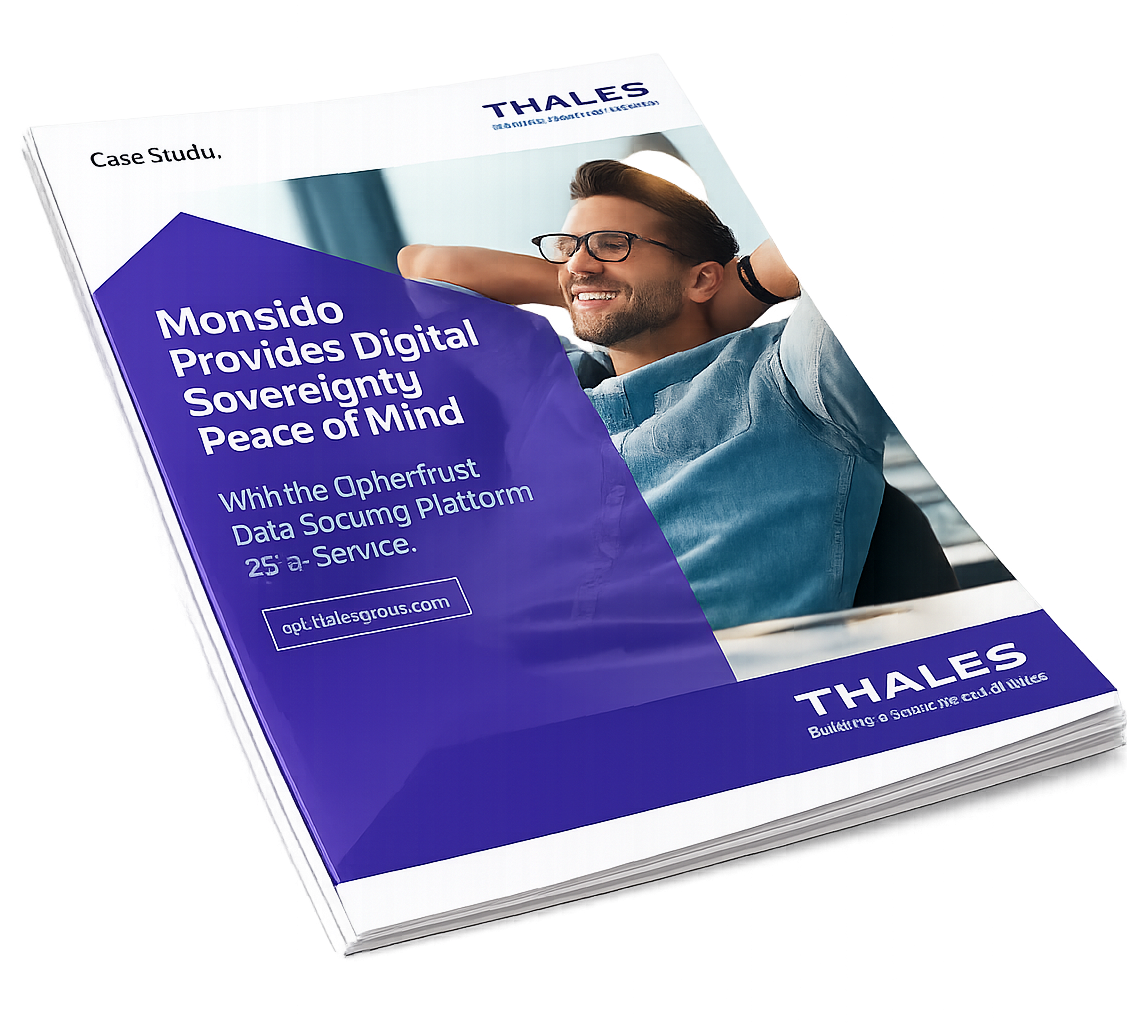
Monsido Provides Digital Sovereignty Peace of Mind with the CipherTrust Data Security Platform as-a-Service
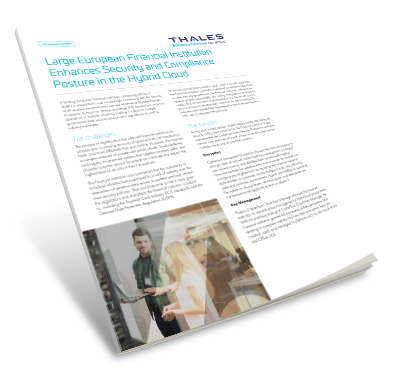
Large European Financial Institution Enhances Security and Compliance
Posture in the Hybrid Cloud
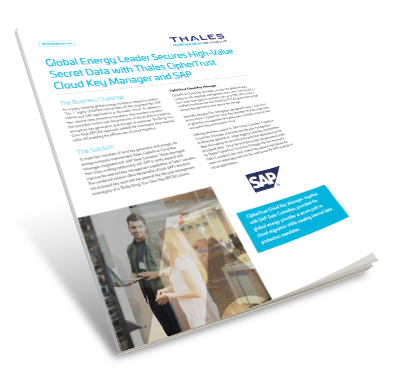
Global Energy Leader Secures High-Value Secret Data with Thales CipherTrust Cloud Key Manager and SAP

“Working with Thales represents a significant step forward in helping customers navigate the complex world of digital sovereignty. With our infrastructure and Thales' advanced security solutions, customers can meet evolving regulatory requirements without compromising on innovation or performance."
Max Peterson
VP Sovereign Cloud at AWS

We Continuously Collaborate and Innovate with Cloud Service Providers
Thales collaborates with major cloud providers to embed sovereignty controls directly into cloud environments. Our solutions enable customer-controlled encryption, centralised key lifecycle management, and support for BYOK and BYOE models. This allows organisations to protect sensitive data, enforce compliance requirements and maintain consistent security policies across multi-cloud and hybrid architectures. The result is a cloud strategy that delivers both agility and control.
Learn More and Browse Resources

Case Study: Monsido Provides Digital Sovereignty Peace of Mind With CipherTrust Data Security Platform-as-a-Service

eBook: Achieve Digital Sovereignty with Thales

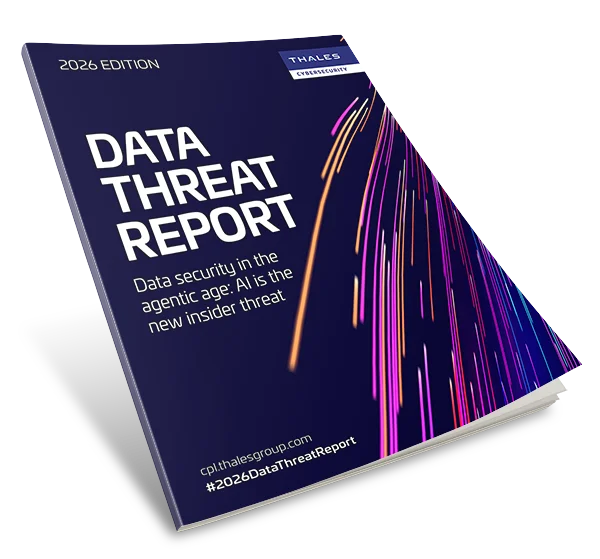
White Paper: Navigating Digital Sovereignty in the Era of AI and Geopolitical Uncertainty

Solution Brief: Thales Security Solutions for Google Workspace

Solution Brief: Microsoft Azure Advanced Data Protection

Solution Brief: Advanced Data Protection for AWS Infrastructure

Report: Maximising Cloud Benefit with Digital Sovereignty
Download our practical guide for security, risk, and IT Leaders
Inside, you will learn:
- What digital sovereignty means in practice
- How AI, cloud concentration and geopolitics are reshaping the risk landscape
- Why conflicting legal frameworks create new compliance challenges
- How to assess your organization’s exposure across data, cloud, identity and encryption
- Practical strategies to balance innovation, cloud agility and regulatory compliance
- The technologies and controls that help maintain control over data, encryption keys and access
- The white paper also provides a practical framework for building a sovereignty strategy, covering encryption, key management, access controls, auditability and cloud architecture.
Please complete the form
The guide will be delivered to your inbox



Copyright © 2026 Thales. All Rights Reserved